Why Theory Matters
Kinetic and fluid simulations tell us what a plasma does; analytic theory tells us why — and lets us predict behavior in regimes too costly or too extreme to simulate directly. Across the group’s three research programs (ionosphere, solar chromosphere, and meteor plasma physics), closed-form theory has repeatedly done the same three jobs: derived the instability thresholds and growth rates that simulations are designed to test, explained anomalous features (conductivities, radar echoes, temperature biases) that pure simulation left unexplained, and extended results into parameter regimes — different magnetic fields, ion species, or electron temperatures — that would be prohibitively expensive to simulate one by one.
Much of this theoretical work has been led by Yakov Dimant, the group’s senior theorist for over two decades, and carried forward into new domains — incoherent scatter radar diagnostics and the 150 km echo problem — by William Longley during his PhD and beyond.
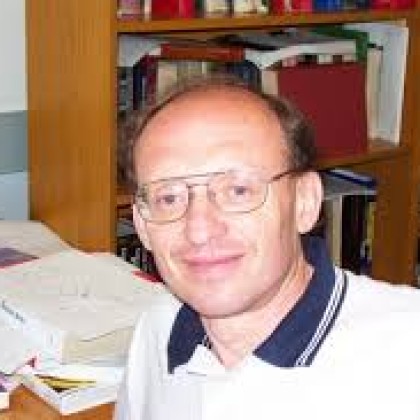
Yakov Dimant
Yakov Dimant develops the analytic and semi-analytic theory that underlies most of the group’s simulation work. His contributions span three domains: the kinetic and fluid theory of meteor plasma trails, the theory of E-region turbulence, anomalous conductivities, and electron-precipitation effects in the ionosphere, and — more recently — the unified fluid theory of E×B and thermal Farley–Buneman instabilities, extended to the partially ionized solar chromosphere. He is a co-author on more than 40 group publications.
Meteor Plasma Trail Theory
Developed the 2-D analytic theory of meteor trail ambipolar fields and anisotropic diffusion, later extended to include external DC electric fields and validated against simulation. This theory also underlies the kinetic description of plasma formation around small meteoroids used to interpret radar head echoes.
E-Region Turbulence, Conductivity & Precipitation
Derived the energy-budget and anomalous-conductivity theory that explains how Farley–Buneman turbulence modifies magnetosphere–ionosphere coupling during storms, the theory of electric-field and current generation by neutral-wind “collisional dynamos,” and — most recently — how electron precipitation raises the instability threshold and suppresses turbulence inside the auroral oval.
Chromospheric Thermal Farley–Buneman Theory
Built the unified fluid theory of E×B and thermal-Farley–Buneman instabilities for arbitrarily magnetized, multi-species ions — the theoretical backbone connecting the group’s ionospheric turbulence theory to the newly discovered instability heating the solar chromosphere.
Selected Theory Publications — Yakov Dimant
- Meteor trail diffusion and fields: 1. Simulations
Dimant, Y.S.; Oppenheim, M.M.; J. Geophys. Res., V.111, doi:10.1029/2006JA011797, 2006 - Meteor trail diffusion and fields: 2. Analytical theory
Dimant, Y.S.; Oppenheim, M.M.; J. Geophys. Res., V.111, doi:10.1029/2006JA011798, 2006 - Meteor plasma trails: effects of external electric field
Dimant, Y.S.; Oppenheim, M.M.; Milikh, G.M.; Ann. Geophys., V.27, pp.279–296, doi:10.5194/angeo-27-279-2009, 2009 - Magnetosphere-ionosphere coupling through E region turbulence: 1. Energy budget
Dimant, Y.S.; Oppenheim, M.M.; J. Geophys. Res., V.116, doi:10.1029/2011JA016648, 2011 - Magnetosphere-ionosphere coupling through E region turbulence: 2. Anomalous conductivities and frictional heating
Dimant, Y.S.; Oppenheim, M.M.; J. Geophys. Res., V.116, doi:10.1029/2011JA016649, 2011 - Generation of electric fields and currents by neutral flows in weakly ionized plasmas through collisional dynamos
Dimant, Y.S.; Oppenheim, M.M.; Fletcher, A.C.; Phys. Plasmas, V.23, 084503, doi:10.1063/1.4961085, 2016 - Formation of plasma around a small meteoroid: 1. Kinetic theory
Dimant, Y.S.; Oppenheim, M.M.; J. Geophys. Res., V.122, doi:10.1002/2017JA023960, 2017 - Effects of electron precipitation on E-region instabilities: Theoretical analysis
Dimant, Y.S.; Khazanov, G.V.; Oppenheim, M.M.; J. Geophys. Res.: Space Phys., V.126, doi:10.1029/2021JA029884, 2021 - Unified fluid-model theory of E×B instabilities in low-ionized collisional plasmas with arbitrarily magnetized multi-species ions
Dimant, Y.S.; Oppenheim, M.M.; Evans, S.; Martinez-Sykora, J.; arXiv:2211.05264, 2022 - Unified fluid theory of the collisional thermal-Farley-Buneman instability including magnetized multi-species ions
Dimant, Y.S.; Oppenheim, M.M.; Evans, S.; Martinez-Sykora, J.; Phys. of Plasmas, doi:10.1063/5.0155500, 2023
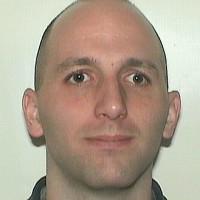
William Longley
As a PhD student and later as a collaborating researcher, William Longley built the theory and simulations connecting incoherent scatter radar (ISR) spectra to the underlying collisional plasma physics. He then used that same theoretical grounding to solve a long-standing puzzle: what drives the anomalous 150 km daytime radar echoes in the equatorial ionosphere. He has since continued collaborating with the group while a faculty member at NJIT.
ISR Spectral Theory & Simulation
Developed particle-in-cell simulations of incoherent scatter radar spectra incorporating electron–ion Coulomb collisions and nonlinear electron–electron collision effects, then validated the resulting forward models directly against Millstone Hill small-aspect-angle radar measurements — work that identified and corrected systematic biases in standard ISR temperature retrievals.
Discovery of the 150 km Echo Mechanism
Extended the group’s photoelectron-driven upper-hybrid instability theory to explain the decades-old mystery of daytime 150 km radar echoes, then followed it with a sole-authored paper identifying nonlinear wave-mode coupling as a further generation mechanism — together the group’s most cited recent theoretical contribution to equatorial aeronomy.
Open-Source Simulation Tools
Continues to contribute to the research field’s software infrastructure, including the open-source electromagnetic FDTD code for modeling radio-wave propagation through structured ionospheric plasma.
Selected Theory Publications — William Longley
- ISR Spectra Simulations With Electron-Ion Coulomb Collisions
Longley, W.J.; Oppenheim, M.M.; Fletcher, A.C.; Dimant, Y.S.; J. Geophys. Res.: Space Phys., V.123, pp.2990–3004, doi:10.1002/2017JA025015, 2018 - Nonlinear effects of electron-electron collisions on ISR temperature measurements
Longley, W.J.; Oppenheim, M.M.; Dimant, Y.S.; J. Geophys. Res.: Space Phys., V.124, pp.6313–6329, doi:10.1029/2019JA026753, 2019 - Millstone Hill ISR Measurements of Small Aspect Angle Spectra
Longley, W.J.; Erickson, P.J.; Vierinen, J.; Oppenheim, M.M.; Lind, F.D.; Dimant, Y.S.; J. Geophys. Res.: Space Phys., V.124, doi:10.1029/2019JA027708, 2020 - The Photoelectron-Driven Upper Hybrid Instability as the Cause of 150-km Echoes
Longley, W.J.; Oppenheim, M.M.; Pedatella, N.M.; Dimant, Y.S.; Geophys. Res. Lett., V.47, doi:10.1029/2020GL087391, 2020 - The Generation of 150-km Echoes Through Nonlinear Wave Mode Coupling
Longley, W.J.; Geophys. Res. Lett., V.51, doi:10.1029/2023GL107212, 2024 - An Open Source Code for Modeling Radio Wave Propagation in Earth’s Ionosphere
Green, A.; Longley, W.; Oppenheim, M.; Young, M.; Front. Astron. Space Sci., doi:10.3389/fspas.2025.1521497, 2025
Theory and simulation are not separate tracks in this group — they are the same research program viewed from two directions. See how these theoretical results connect to simulation work on the Ionosphere, Chromosphere, and Meteor Physics pages, or how they are computed on the Simulations page.
Analytic Theory
Rigorous closed-form and semi-analytic theory, developed alongside massively parallel simulation, is what lets this group explain — not just reproduce — the plasma physics of the ionosphere, chromosphere, and meteor trails.
Research in the group runs through the BU Astronomy PhD program: bu.edu/astronomy/graduate.