BOSTON UNIVERSITY
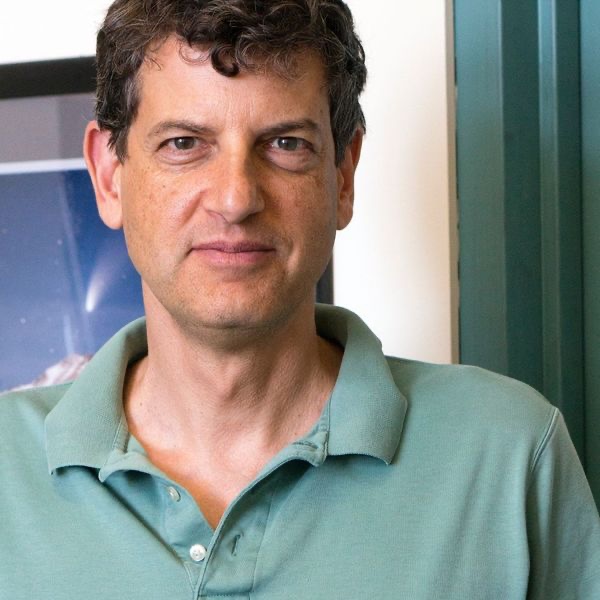
Professor Meers Oppenheim

Meers Oppenheim

Professor of Astronomy & Electrical & Computer Engineering; Associate Director, Center for Space Physics • Boston University

My group studies the plasma physics of Earth’s ionosphere, the solar chromosphere, and meteors entering our atmosphere, using massively parallel kinetic, hybrid, fluid, and electromagnetic simulations alongside analytic theory and observational analysis. We are part of BU’s Center for Space Physics, one of the world’s leading groups in space plasma research.

Research Programs

Three interconnected programs united by the power of kinetic plasma simulation and analytic theory. Click any card for the science, key questions, and publications.

Ionospheric Plasma Physics

Earth’s ionosphere is a natural plasma physics laboratory. We run massively parallel particle-in-cell (PIC) and hybrid simulations of E-region instabilities and turbulence — including the Farley–Buneman and gradient-drift instabilities — and compare results to incoherent scatter radar observations. Recent work spans anomalous conductivities, the enigmatic 150 km echoes, and the first full-flux-tube 3D electrojet simulations.

Explore Ionosphere Research →

Solar Chromosphere Physics

We discovered a new class of plasma turbulence — the thermal Farley–Buneman instability — operating in the partially ionized solar chromosphere, which may help explain the puzzling heating of the chromosphere itself. Multi-fluid and kinetic PIC simulations developed in our group show the instability generates turbulence and heating across a wide range of chromospheric conditions, connecting directly to open solar physics questions.

Explore Chromosphere Research →

Meteor Plasma Physics

Meteoroids ablating at 11–72 km/s produce plasma trails that illuminate like shooting stars and scatter radar signals in exotic ways. Our group studies how meteor trail plasma forms and evolves, why it develops field-aligned instabilities visible as nonspecular radar echoes, and how meteor trails can serve as precision wind sensors in the mesosphere and lower thermosphere. We combine atomic-scale ablation simulations, PIC plasma codes, and radar observations.

Explore Meteor Research →

CV Highlights

Computational Plasma Physics

We develop and deploy massively parallel PIC, hybrid, fluid/multi-fluid, and electromagnetic FDTD codes on national supercomputers, often simulating billions of particles on thousands of CPU cores. Our group also builds open-source tools for the broader space physics community. Students gain deep expertise in scientific computing as well as plasma physics.

Our Simulation Methods →

Theory & Group Members

Alongside simulation, we pursue rigorous analytic theory. Senior Research Scientist Yakov Dimant is a central theorist in the group, with fundamental contributions to E-region instabilities, meteor plasma, and chromospheric physics. Graduate students and postdocs work on all three research programs.

Explore Analytic Theory →

Graduate Study at BU

The group’s research runs through BU’s Astronomy PhD program.

The Work Research in the group spans plasma physics, astronomy, and computational science. Former group members have gone on to faculty positions at Stanford and the University of Chile, and to NASA, SpaceX, and national laboratories.
Useful Backgrounds Useful backgrounds include physics, astronomy, applied mathematics, or engineering, with some interest in scientific computing. Prior programming experience (Python, C, or Fortran) is helpful but not required.
Contact Meers Oppenheim
725 Commonwealth Ave, Rm 509
Boston, MA 02215
617-353-6139